Are Egyptian Love Spells the Most Powerful Rituals?
The question of whether Egyptian love spells are the most powerful rituals ever created has fascinated historians, spiritual seekers, occult practitioners, and skeptics alike for generations. The mystique of ancient Egypt—its pyramids rising from desert sands, its intricate hieroglyphs carved into temple walls, and its enduring mythology—creates an aura of authority around everything associated with its spiritual traditions. Among these traditions, love spells occupy a particularly intriguing place. They promise influence over the deepest human emotion: love. To understand whether Egyptian love spells deserve their reputation as the most powerful rituals, we must examine their historical origins, spiritual framework, symbolic richness, psychological impact, and cultural longevity. Only by exploring these dimensions in depth can we begin to evaluate the true nature of their power.
The Spiritual Landscape of Ancient Egypt
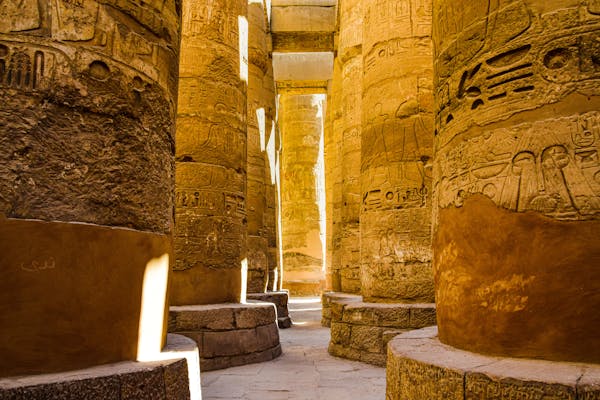
Ancient Egyptian spirituality was not a casual or peripheral aspect of life; it was the very foundation of social order, political legitimacy, and personal identity. Religion permeated every layer of society, from the pharaoh believed to be divinely ordained, to the farmer praying for fertile crops. The Egyptians viewed the universe as a delicate balance between chaos and order, embodied in the principle of Ma’at. Maintaining harmony with divine forces was not optional—it was essential for survival. Within this worldview, rituals were not symbolic gestures but practical technologies of influence. Words, gestures, and sacred objects were believed to carry intrinsic power capable of shaping reality. Love spells, therefore, were not whimsical romantic gestures but carefully constructed invocations grounded in a cosmology where language itself could command divine forces.
The Concept of Heka: The Foundation of Magical Power
At the core of Egyptian ritual practice was the concept of Heka, often translated as “magic,” though this word fails to capture its depth. Heka was both a deity and a cosmic force—the underlying energy that made creation possible. It was not separate from religion but intertwined with it. Priests, healers, and even ordinary citizens invoked Heka to protect themselves, cure illness, ensure prosperity, and influence relationships. Love spells drew upon this same sacred current. When an Egyptian practitioner spoke an incantation, they were not merely hoping for a favorable outcome; they believed they were activating the same creative power that shaped the cosmos. This integration of magic with theology gave Egyptian love rituals an authority and coherence that many later magical systems lacked.
Language as a Tool of Creation
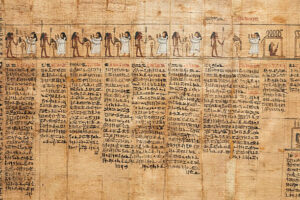
The Egyptians believed that spoken words possessed tangible force. To name something was to exert influence over it. This belief extended to love magic, where the precise pronunciation of divine names, the repetition of sacred formulas, and the use of symbolic imagery were considered critical. Papyri discovered by archaeologists contain elaborate instructions for love spells, complete with invocations to gods associated with passion, fertility, and desire. The power of these rituals was thought to reside not only in divine intervention but also in the vibrational potency of the spoken word itself. In this context, Egyptian love spells were seen as highly structured systems rather than improvised acts of wishful thinking.
Historical Evidence of Love Spells
Archaeological findings provide compelling evidence that love magic was practiced widely in ancient Egypt. Texts inscribed on papyrus scrolls describe rituals intended to attract a lover, secure loyalty, or rekindle fading affection. Some spells were subtle, asking the gods to incline a person’s heart gently. Others were more forceful, demanding that the desired individual feel restless until united with the spell-caster. These documents reveal a society that acknowledged romantic longing as a powerful force requiring divine mediation. The survival of such texts over millennia contributes to the belief that Egyptian love spells carry extraordinary potency, as their formulas have endured the erosion of time.
Materials and Symbolism in Ritual Practice
Egyptian love spells often incorporated physical components: wax figurines, inscribed amulets, fragrant oils, and symbolic drawings. Each material carried layered meaning. Wax could represent the malleability of the human will, while oils symbolized attraction and sensuality. The use of red ink, associated with vitality and intensity, underscored the passionate intent of certain incantations. These tangible elements were not arbitrary decorations but integral parts of a ritual technology designed to engage the senses and anchor intention. By combining physical objects with spoken invocation, practitioners created a multisensory experience that reinforced belief and emotional investment, potentially enhancing the spell’s perceived effectiveness.
The Psychological Dimension of Power
When evaluating whether Egyptian love spells are the most powerful rituals, it is crucial to consider the psychological dimension. Rituals, regardless of cultural origin, function partly by shaping perception and behavior. A person who performs a love spell may feel more confident, focused, and emotionally aligned with their desire. This shift in mindset can influence social interactions, making the individual more open, attentive, and expressive. In ancient Egypt, where belief in Heka was widespread and socially reinforced, the psychological impact would have been even stronger. Community validation amplified personal conviction, creating a powerful feedback loop between expectation and experience. In this sense, the “power” of Egyptian love spells may lie as much in the psychological transformation they induce as in any metaphysical force.
Collective Belief as Amplifier
Unlike modern occult practices that often operate on the margins of society, Egyptian magic existed within a culture that collectively affirmed its legitimacy. When an entire civilization shares a belief in the potency of ritual language and divine intervention, the psychological and social reinforcement becomes immense. A love spell performed in such an environment was not an isolated act of desperation but part of an accepted spiritual framework. This communal endorsement likely strengthened the practitioner’s faith, thereby increasing the ritual’s emotional and behavioral impact. Whether one interprets this as supernatural power or social psychology, the effect was undeniably profound.
Comparison with Other Cultural Love Rituals
To claim that Egyptian love spells are the most powerful rituals requires comparison with other traditions. Ancient Greece, Mesopotamia, India, and later European folk cultures all developed complex systems of love magic. Greek binding spells, for instance, sought to restrain a beloved’s will, while certain Indian tantric practices aimed to harmonize energetic fields between partners. What distinguishes Egyptian rituals is their integration into a comprehensive cosmology and their emphasis on divine authority. Rather than relying solely on symbolic acts, they invoked gods whose domains explicitly included love, fertility, and passion. This theological anchoring may have contributed to their enduring reputation.
Durability Across Millennia
Few magical traditions have maintained continuous fascination for over three thousand years. Egyptian love spells, preserved in museums and scholarly publications, continue to inspire modern practitioners. Their imagery—lotus blossoms, falcons, ankhs—retains symbolic resonance. The sheer longevity of these rituals suggests that they tapped into archetypal themes that transcend cultural boundaries. While other love spells have faded into obscurity, Egyptian formulas remain subjects of study and adaptation. This persistence contributes to the perception of exceptional power, as rituals that survive across ages are often viewed as inherently potent.

Ethical Considerations and Intent
One cannot discuss the power of love spells without addressing ethical implications. Many ancient Egyptian spells sought to compel affection, raising questions about free will. Even in antiquity, there was awareness that magic carried moral responsibility. Some texts caution against misuse, implying that imbalance could result from coercive intent. In evaluating their power, it is important to consider whether influence achieved through ritual aligns with personal integrity. Modern interpretations often emphasize self-improvement and attraction rather than domination, reflecting evolving ethical standards. The strength of a ritual may ultimately depend not only on technique but on the intention guiding it.
The Role of the Gods in Romantic Influence
Egyptian love spells frequently invoked deities associated with beauty, fertility, and desire. By calling upon divine archetypes, practitioners aligned themselves with cosmic forces believed to govern attraction. This appeal to higher authority distinguished Egyptian rituals from purely folk practices. The involvement of the gods imbued the spells with gravitas and spiritual legitimacy. Whether viewed as literal divine intervention or symbolic engagement with archetypal energies, this dimension added depth and perceived potency to the practice.
Modern Revival and Interpretation
In contemporary spiritual communities, Egyptian love spells are often adapted to suit modern sensibilities. Practitioners may reinterpret ancient incantations through psychological or symbolic frameworks rather than literal divine command. The revival of interest in Egyptian magic reflects a broader fascination with ancient wisdom traditions. However, modern adaptations sometimes simplify complex rituals, stripping them of historical context. To assess whether these spells remain powerful today, one must distinguish between authentic reconstruction and romanticized imitation. True potency may require understanding the cultural and spiritual matrix from which the rituals emerged.
Symbolic Resonance in the Modern Mind
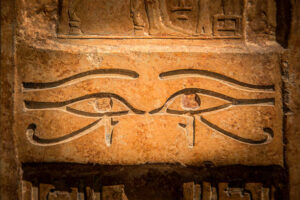
Symbols such as the ankh or the Eye carry strong visual and emotional impact even outside their original religious context. When incorporated into modern love rituals, they evoke a sense of antiquity and sacred mystery. This symbolic resonance can deepen emotional engagement, which in turn enhances the psychological dimension of ritual effectiveness. The continued allure of Egyptian imagery suggests that its archetypal power endures, influencing contemporary perceptions of magical strength.
Are They Truly the Most Powerful?
Determining whether Egyptian love spells are the most powerful rituals ultimately depends on how one defines power. If power means historical longevity, rich symbolism, theological integration, and psychological impact, then Egyptian rituals certainly rank among the most formidable. If power is measured by empirical evidence of supernatural influence, the answer becomes more complex, as such phenomena resist scientific verification. What can be stated with confidence is that Egyptian love spells represent one of the most sophisticated ritual systems ever devised to address the human longing for connection. Their structure, symbolism, and cultural authority combine to create an experience that feels powerful to those who engage with it.
The Interplay of Faith and Outcome
Faith acts as a catalyst within any ritual system. In ancient Egypt, belief in Heka and divine order infused love spells with existential significance. Modern practitioners who approach these rituals with deep respect and understanding may experience a similar amplification of intention. Conversely, casual or skeptical engagement may diminish perceived results. Thus, the question of ultimate power may rest less on the ritual’s origin and more on the participant’s conviction and ethical alignment.
Conclusion: Power as a Multifaceted Phenomenon
Egyptian love spells occupy a unique position in the history of magical practice. Rooted in a civilization that fused religion, art, and governance into a cohesive worldview, these rituals were designed with extraordinary symbolic precision. Their enduring legacy, supported by archaeological evidence and continuous cultural fascination, reinforces the perception of unmatched potency. Yet power is not a singular quality; it emerges from a convergence of belief, intention, symbolism, and social context. Egyptian love spells may not hold an exclusive monopoly on magical strength, but they exemplify how ritual can become deeply embedded in a culture’s understanding of reality. Whether regarded as spiritual technology, psychological catalyst, or historical artifact, they remain among the most compelling expressions of humanity’s quest to shape love through sacred means.


